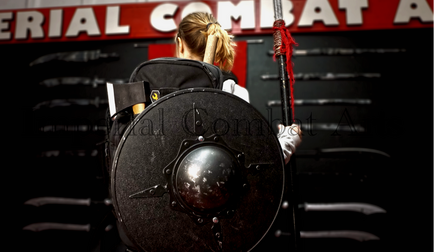
System Overview
Imperial Combat Arts is taught as a coherent system with defined structure and progression. Rather than separating disciplines into isolated tracks, training develops external technique, internal mechanics, weapons proficiency, and conditioning in parallel. This ensures that skill, power, and physical capacity evolve together rather than in isolation.
Instruction follows a deliberate progression. Early training establishes foundational structure, movement, and mechanics. As students advance, these foundations are tested under increasing complexity, resistance, and integration. Specialization occurs only after core principles are internalized, preserving both technical integrity and practical effectiveness.
This method reflects traditional Chinese martial training while remaining grounded in modern practice. The result is a system that supports long-term development, functional application, and the responsible transmission of martial knowledge.
Core Training Components
Four interdependent training components developed concurrently for balanced progression, functional capability, and long-term sustainability.
External Combat Methods
Training develops structure, power generation, striking, grappling, and tactical movement. Emphasis is placed on efficient mechanics, timing, distance management, and controlled application under realistic conditions.
Internal Power Development
Internal practices refine alignment, breath, intent, and whole-body coordination. This work supports stability, efficiency, longevity, and controlled expression of power beyond muscular strength alone.
Weapons Training
Weapons are taught as extensions of body mechanics and tactical principles rather than isolated specialties. Training includes traditional weapons alongside applied blade and impact weapons to reinforce structure, coordination, distance, and decision-making.
Conditioning & Resilience
Physical conditioning supports durability, joint integrity, grip strength, impact tolerance, and the ability to function under physical stress. Conditioning is progressive and scaled appropriately to each stage of training.
Arts Taught
Each art serves a defined purpose within overall development rather than existing as a standalone program.
Shuai Jiao
Traditional Chinese wrestling emphasizing balance disruption, throws, clinch control, and positional dominance.
Sanda & Cross-Style Sparring
Pressure-tested striking, throwing, and clinch work incorporating cross-style and MMA-informed sparring formats to develop timing, adaptability, and composure.
Combat Grappling
Integrated standing and ground methods combining BJJ-based combatives, traditional ground fighting, Chin Na, and modern control tactics.
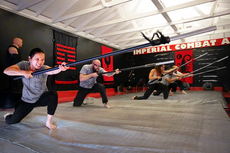
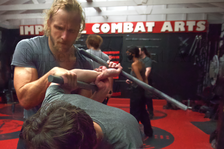
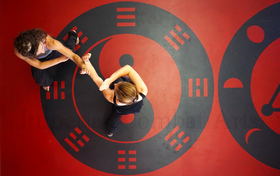
Training Progression
Training at Imperial Combat Arts follows a structured, long-term progression designed to develop skill, understanding, and responsibility in parallel. Advancement is based on demonstrated competency rather than time alone.
Early training emphasizes foundational mechanics, posture, movement quality, and control. As these foundations stabilize, students are introduced to increasing levels of complexity, resistance, and integration across striking, grappling, weapons, and internal work.
At advanced stages, training shifts toward refinement, adaptability, and application. Students are expected to express core principles across disciplines while maintaining technical clarity and composure under pressure.
Imperial Combat Arts is a comprehensive martial training system rooted in traditional Chinese martial arts and adapted for modern practitioners. Our curriculum integrates external combat methods, internal power development, weapons training, and conditioning into a structured, progressive path.
Training emphasizes functional skill, discipline, and long-term development — whether the goal is personal mastery, practical self-defense, or preservation of classical martial knowledge.
Training at Imperial Combat Arts is grounded in the realities of physical confrontation rather than performance or sport. Conditioning, impact tolerance, grip development, and structural integrity are treated as foundational skills, not advanced specialties. Students are trained progressively to ensure that techniques, weapons use, and internal mechanics function under resistance, fatigue, and pressure.
Who Is This Training For
Imperial Combat Arts is intended for individuals seeking structured, long-term martial training rather than short-term fitness or recreational activity. The curriculum is designed for students who value discipline, consistency, and depth of study.
Training is appropriate for beginners willing to build foundations carefully, as well as experienced practitioners seeking a coherent system that integrates striking, grappling, weapons, and internal development. Progression requires regular participation, personal accountability, and respect for the training process.
This program is not oriented toward casual drop-in practice or rapid certification. It is suited to those interested in serious skill development, practical capability, and the responsible study of martial traditions within a modern training environment.
Student Experiences
Training here is structured and demanding. Progress is earned through consistency, discipline, and attention to detail. The system integrates physical skill, mental development, and long-term growth.
— Student, Google Review
This is not casual training. The instruction develops confidence, composure, and real capability through disciplined practice and accountability.
— Student, Google Review
The training is comprehensive and integrated, designed for those seeking depth, structure, and practical application rather than short-term or recreational practice.
— Student, Google Review
The Path Begins Here
Traditional Chinese martial arts training in Denver, Colorado. Serving students throughout Colorado. Admission is by interview — contact us to begin the process.
Begin Your Training
Imperial Combat Arts is intended for individuals seeking structured, long-term martial training rather than short-term fitness or recreational activity. Admission is by interview — contact us to start the process.
Interview required for admission. This program is suited to those interested in serious skill development, practical capability, and the responsible study of martial traditions within a modern training environment.